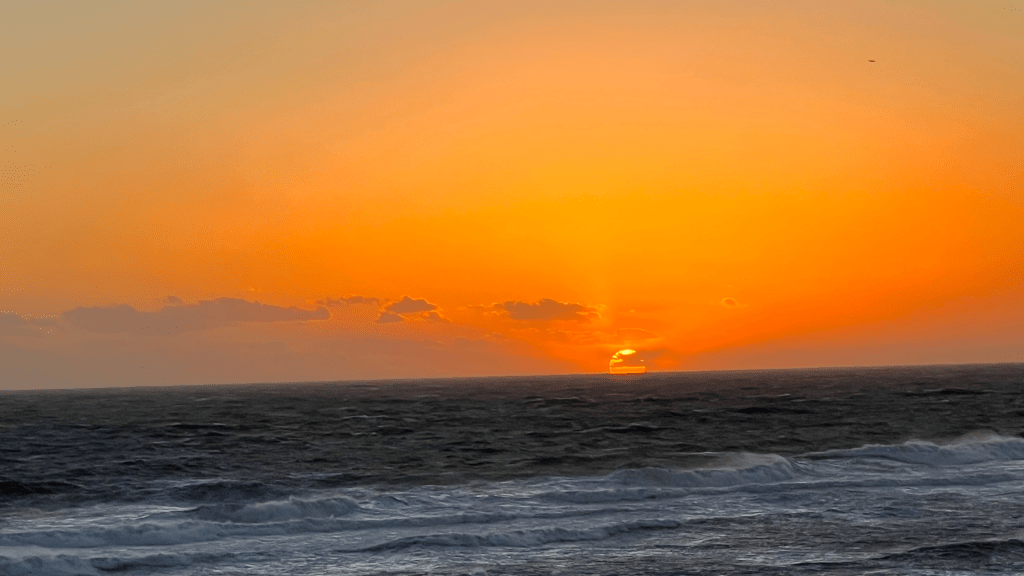
As cold weather swept across the nation (including my Tennessee home), I sat in a warmer spot: the Gulf Coast of Florida. I savored the vast expanse of emerald water, sunlight reflecting on waves; shoreline birds scuttling, skimming, soaring, diving and floating; sunrises and sunsets blazing across blue skies in salmon, persimmon, lemon and gold with shadowy, cloud-grey puffs and streaks. (Still, I felt connected to Tennessee: the sand that stuck to my feet is perfectly white, round, grounded down Appalachian quartz.)
What I missed was my favorite part of a Tennessee winter: snowfall’s hushed reverence (especially at daybreak), the snow’s nightlight reflection through the darkest hours, the beauty of a blanketed landscape, whooshing sleds and bright laughter of neighbors gathering on the snow-covered (and perfect for sledding) hill in my yard—moments made possible when snow sticks.
As the turning of a calendar year reminds us, winter is a time for death and renewal. I could muse about New Year’s resolutions and offer odds as to how many will stick, but I would rather reflect on things more absolute. The way water joins to create puddles, ponds, creeks, lakes, rivers, oceans. The silence of snow. How poetry shifts—like tides, landscapes, seasons, weather … and sticks with us through centuries (like this famous Du Fu poem from the 700s, discussed on a recent Poetry for All podcast episode). How fortunate we are to carry on this ancient art and put our own imprint on poetry. How wonderful we can join together on the journey.
As we roll out the last few months of our program year, we will have an opportunity to explore the ways poetic forms stick and shift, the beauty inherent in poetic art and craft. I invite you to join us in workshop-style member meetings, as Emily Wilson explores the “criminally underutilized” villanelle and Jake Lawson explores the sonnet (including the free-wheeling American version). William Garrett Wright will lead the workshop for our 67th poetry festival (stay tuned for details!). Consider joining a critique group and participating in contests. Share your successes. Read a poem at a meeting! I find a special joy in experiencing your poetry and learning about your poetic endeavors. Like weather, sand, water, snow, poetry—discovering the poems in each of us is a thing that sticks.
With reverence and anticipation—
Lisa Kamolnick
President, Poetry Society of Tennessee
 Poetry Society of Tennessee